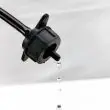
Set up the system by routing the tubing to each plant and positioning the drippers where you want water delivered, then place the solar panel where it can receive direct daylight. This helps you plan the layout across compact gardens and enclosed spaces while keeping watering focused on individual plants.
✓ 22 LPH max flow rate✓ 20 adjustable drippers✓ Four working modes✓ Solar panel: 1W / 6V✓ LiFePO4 battery✓ CE, UKCA, RoHS, REACH
Key Features At A Glance
Automatic Watering Cycles
Runs scheduled drip routines
Four working modes available
Helps maintain steady moisture
Solar + Battery Support
Solar panel: 1W / 6V
Operating voltage: 3.2V
LiFePO4 battery stores energy
Targeted Drip Delivery
20 adjustable drippers included
Flow can be set per plant
Ideal for mixed water needs
Safe & Certified Design
CE, UKCA, RoHS and REACH
No mains wiring required
Designed for outdoor use
Where It Works Best
Plant Beds & Raised Planters
Steady root-zone drip watering
Adjustable output per emitter
Useful for compact layouts
Greenhouses & Balconies
Suitable for pots and trays
Supports enclosed growing zones
Simple off-grid installation
Installation Overview
Installation is straightforward. Position the solar panel in direct
daylight, connect the control unit to your water source, then route the
tubing to each plant and adjust dripper flow as needed.
Step 1: Place The Solar Panel
Choose an unshaded sunny spot
Angle towards strong daylight
Connect securely to the unit
Step 2: Route Drippers To Plants
Run tubing across the growing area
Position drippers at plant bases
Avoid kinks or sharp bends
Step 3: Select A Working Mode
Choose one of four schedules
Match cycle timing to conditions
Test output before full use
How Solar Operation Works
The solar panel charges the internal LiFePO4 battery during daylight hours.
The controller then runs timed watering cycles based on the selected mode,
delivering water through the tubing and drippers for targeted irrigation.
Install the system by mounting the solar panel, positioning the control box
near your water supply, then routing the tubing and drippers across your
growing area.
Step 1: Mount The Solar Panel
Place in strong, direct sunlight
Connect via the solar input port
Angle for best daily exposure
Step 2: Install The Control Box
Mount within 2 m of water level
Indicator lights show charge status
Connect inlet and outlet securely
Step 3: Position Water Level Sensor
Fit detector near inlet filter point
Supports low-water alarm protection
Helps prevent pump run-dry issues
Step 4: Connect Tubing & Drippers
Attach tubing to the outlet port
Insert siphon breaker in main line
Use tees to connect drip heads
Step 5: Set Watering Mode
Use mode button to choose duration
Range: 0.5 minutes up to 8 minutes
Test mode confirms correct flow
Step 6: Run A System Test
Confirm indicator lights operate
Check steady drip from all heads
Adjust layout if required
Always refer to the supplied user manual for any manufacturer-specific
guidance before long-term operation.
The solar panel powers the system and recharges the battery. The control box
runs timed watering cycles, feeding water through the tubing network and
delivering drip irrigation directly to each plant.
Solar Power Supply
Runs directly from daylight conditions
Recharge varies depending on sunlight
No mains electricity required
Battery Backup Support
Helps operation during lower light
Recharges automatically in sunshine
Supports timed watering routines
Timed Drip Control
Adjust watering via mode selection
0.5 to 8 minute cycle duration range
Designed for consistent daily care
Water Level Protection
Low-water alarm protects the pump
Sensor monitors inlet supply levels
Helps support reliable operation
This combination of solar charging, adjustable timing, and targeted drip
delivery supports reliable automated watering for smaller growing spaces.
How many plants can this water and what size area does it cover?
The kit includes 20 adjustable drippers fed by 20 metres of 4mm tubing, making it best suited to small balcony or patio gardens up to around 8 square metres with up to 20 plants. Each dripper is adjustable up to 2 L/H, and total system flow is capped at 22 LPH, so it's designed for individual plant watering rather than broad bed coverage.
Can I extend the tubing if my plants are spread further apart?
We don't recommend extending the supplied tubing with standard pond hose. This kit runs at 0.2 MPa pump pressure (around 29 PSI), and the supplied tubing is pressure-rated specifically for irrigation duty. Our regular Sunspray pond pump tubing is not rated for sustained pressurised use. If you need more reach, source 4mm pressure-rated push-fit irrigation tubing from a dedicated irrigation supplier.
How long does each watering cycle run and can I set the timing?
Yes, the controller has selectable cycle durations of 0.5, 1, 2, 4 or 8 minutes — described as four working modes plus a test option. The solar panel charges the internal LiFePO4 battery (3.2V / 1500 mAh) during daylight, and the controller then runs your chosen timed cycle automatically. There's no mains wiring required, and a low-water sensor helps protect the pump from running dry.
Сonsultation
If you have questions, please ask, do not hesitate,we are always happy to help you