Order by 3:00 PM Monday – Friday to receive your parcel the next day.
Orders placed after 3:00 PM ship the next working day on the same 24‑Hour service and usually arrive the following day.
See Full Delivery Information.
Overview
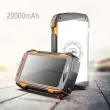
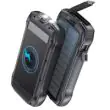
Wireless waterproof solar charger with 20000 mAh capacity, fast wireless charging up to 10W, rugged waterproof, dustproof and shockproof design, and LED SOS light.
Use the integrated solar panel for top-up charging in daylight, or recharge the power bank via USB, then power devices by cable or by placing a compatible phone on the wireless charging area. Multiple input and output options let you match your setup to the devices you carry and how you prefer to charge on the move.
Combining cutting-edge charging technology with rugged durability for reliable power anywhere
Charging Technology
PD 18W Two-Way Fast Charging
10W Fast Wireless Charging
Dual USB Outputs
Type-C Input and Output
Solar Power Integration
Protection Features
Waterproof Construction
Shockproof Design
Overcharge Protection
Temperature Control
Short Circuit Prevention
Smart Features
Device Auto-Detection
Digital LED Power Display
Multi-Device Charging
Camping Light with SOS Mode
Emergency Light Functionality
Whether you're scaling mountains, exploring remote locations, or preparing for emergencies, this versatile power bank ensures your devices stay charged anywhere. With its waterproof, dustproof, and shockproof design, it's built to withstand nature's challenges while delivering reliable power wherever you need it most.
Revolutionary Charging Technology
Featuring state-of-the-art charging capabilities, our solar power bank integrates three charging methods: high-efficiency solar panels, fast USB charging, and convenient wireless charging. The advanced Li-Polymer battery ensures optimal performance and longevity, while multiple protection systems safeguard your devices.
The integrated solar panel harnesses solar energy with superior efficiency, providing a sustainable power source during outdoor activities. Combined with fast wireless charging and multiple USB outputs, it's the perfect all-in-one power solution for modern devices.
Real-World Power Solutions
Discover how the Wireless Solar Power Bank 20000mAh adapts to your adventures and travel needs
3-Day Camping Power: • Daily phone charging for 4 people • GPS device support • Emergency torch power • Solar top-up in good weather
Festival & Events
Multi-device charging hub
Wireless charging for quick top-ups
Shockproof for festival conditions
Dust and splash protection
Group charging capability
Weekend Festival Power: • 6-8 full phone charges • Supports 4-5 people's devices • Camera & speaker charging • Backup power for 2-3 days
Built for the Great Outdoors
Don't let harsh conditions limit your adventures. This solar power bank features industrial-grade protection against water, dust, and impacts. The robust construction withstands demanding outdoor environments, while maintaining a compact, portable design that fits easily in your backpack.
The waterproof and shockproof design ensures complete protection against the elements, making it ideal for camping, hiking, or any outdoor activity. Even in challenging conditions, you can rely on this power bank to keep your devices charged and ready.
Power Capacity Guide
Smartphones
5-6 full charges
Based on 3000-4000mAh phones
Tablets
1-2 full charges
Based on 8000mAh tablets
Solar Boost
+2000-3000mAh per day
During full sunny conditions
Note: Actual performance may vary based on device battery capacity, charging conditions, temperature, and usage patterns.
Universal Device Compatibility
Our power bank is engineered to work seamlessly with virtually all USB-chargeable devices, supporting the latest fast-charging protocols.
Apple Devices
iPhone 15 Series (Pro, Pro Max, Plus)
iPhone 14/13/12 Series
iPad Pro (M2, M1 models)
iPad Air (5th & 6th gen)
iPad Mini (6th gen)
Samsung Devices
Galaxy S24/S23/S22 Series
Galaxy Z Fold/Flip Series
Galaxy A54/A53/A34 Series
Galaxy Tab S9/S8 Series
Galaxy Book Series
Other Devices
Google Pixel 8/7/6 Series
OnePlus 12/11/10 Series
Gaming Devices
Action Cameras
Wireless Accessories
Your Reliable Power Companion
More than just a power bank, this device represents peace of mind for all your outdoor adventures and travel needs. The combination of solar charging capability and extensive battery capacity ensures you're never left without power, whether you're on a weekend camping trip or a month-long expedition.
Backed by our comprehensive 12-month warranty and dedicated customer support, you can trust in the quality and reliability of our solar power bank. Join thousands of satisfied customers who have made this their go-to portable power solution.
* Power Bank Best Practices *
Fully charge before long trips (4-6 hours via USB)
Position solar panel directly towards sunlight when possible
Keep within optimal temperature range (-10°C to 55°C)
Use provided fast-charging cables for best performance
For reliable UK power, always use mains charging as your primary method, with solar as a backup or for emergencies. Follow these steps:
1. Initial Charge (Essential)
First use: Fully charge your power bank via mains (Type-C cable included).
Duration: Charging time depends on battery size. Example: a 20,000mAh bank may take 6–8 hours; a 30,000mAh bank may take 8–10 hours; larger banks will take longer.
LED indicator: Shows charging progress.
2. Solar Panel Positioning
Best angle: In the UK, tilt the panel at 30–40° in spring/autumn, and flatter (10–20°) in summer when the sun is higher.
Panel direction: Always face the panel directly towards the sun for best results.
Panel size matters: Larger panels (e.g. 6–8W folding panels) will charge much faster than small built-in panels (1–2W).
3. Estimating Solar Charging Time
Solar panel output: A typical built-in panel (1–2W, ~200–400mA) may add 1,000–2,000mAh per sunny summer day.
Folding panels: A 6–8W folding panel can add 3,000–4,000mAh per day in strong sun.
Calculation:Daily mAh added ≈ panel current (mA) × hours of direct sun. For example, a 400mA panel × 5 hours = 2,000mAh.
Battery size: Divide your battery capacity by the daily solar input to estimate full charge time. (e.g. 20,000mAh ÷ 2,000mAh/day = 10 days in sun)
UK Charging Recommendations
Spring/Summer Use
Solar works best April–August, especially on clear days.
6–8 hours of direct sunlight needed for meaningful charge.
Keep panel clean from pollen, dust, or bird droppings.
Expect 1,000–4,000mAh per day depending on panel size and sun strength.
Autumn/Winter Use
Rely on mains charging October–February.
Solar may only maintain charge, not increase it, due to low sun and short days.
Store indoors if temperatures drop below 0°C.
Solar Charging & Glass – What You Need to Know
Direct sunlight is essential: For best results, place your charger outside, facing the sun. Avoid charging through glass or plastic covers.
Behind glass (car or indoors): Car windows and home glazing can block 50–70% of solar energy. Charging speed will drop sharply, and may not work at all on cloudy days.
Why? Modern car glass is designed to filter UV and reduce heat, which also greatly reduces the type of sunlight your charger needs.
Tip: If you must use solar in a car, place the power bank as close to the glass as possible on a sun-facing dashboard. Expect much slower charging.
Fact: Solar charging behind most car windows is typically only 20–40% as effective as outdoors. For fastest solar charging, always use direct, unobstructed sunlight.
Maintenance Tips
Panel care: Wipe clean with a microfiber cloth weekly.
Mains priority: Charge fully before trips (solar is backup).
Storage: Keep 50% charged if unused for months.
Temperature caution: Avoid leaving your power bank in hot cars or freezing conditions.
Example: A 2W built-in panel may add up to 1,500mAh per sunny summer day. An 8W folding panel can add up to 4,000mAh per day in strong sun. Actual results depend on weather, panel angle, and location.
This hybrid charger combines solar and mains charging for reliable power anywhere. Below we explain how it works for all models, including those with built-in and folding solar panels.
1. Dual Charging Methods
Solar Charging: Converts sunlight into power. Built-in panels are typically 1–2W (200–400mA); folding panels may be 6–8W (1200–1600mA).
Mains Charging: Fast charging via Type-C, Micro USB, or Lightning (model dependent).
Wireless Charging: Some models support Qi wireless charging for compatible phones (see product details).
The power bank automatically uses the fastest available charging source.
2. Power Storage
High-capacity lithium battery (e.g. 20,000–46,000mAh, varies by model).
Stores energy from solar or mains for later use.
Long standby: Holds charge for up to 3–4 months when unused.
3. Device Charging
Multiple outputs: Dual USB-A, Type-C, and sometimes wireless (see your model).
Fast charging: Up to 2.4A per port (model dependent).
Auto-detects and adjusts for your device's needs.
Solar Performance & Optimization
Panel angle: For best results in the UK, tilt the panel at 30–40° in spring/autumn, and flatter (10–20°) in summer when the sun is higher.
Panel size matters: Built-in panels (1–2W) may add 1,000–2,000mAh per sunny day; folding panels (6–8W) can add 3,000–4,000mAh per day.
Estimate your charge: Daily mAh added ≈ panel current (mA) × hours of direct sun. Example: 400mA × 5 hours = 2,000mAh.
Battery size: Divide your battery capacity by daily solar input to estimate full charge time. (e.g. 20,000mAh ÷ 2,000mAh/day = 10 days in sun)
Glass warning: Charging behind car or house glass can reduce solar input by 50–70%. For best results, use outdoors in direct sunlight.
Example: A 2W built-in panel may add up to 1,500mAh per sunny summer day. An 8W folding panel can add up to 4,000mAh per day in strong sun. Actual results depend on weather, panel angle, and location.
Pro Tips for Best Performance
Initial charge: Fully charge via mains before first use. Charging time depends on battery size (e.g. 20,000mAh: 6–8 hours; 30,000mAh: 8–10 hours; larger banks take longer).
Solar charging: Works best in direct, unobstructed sunlight. Clean the panel regularly for maximum efficiency.
Panel angle: Adjust the tilt for the season—flatter in summer, steeper in spring/autumn.
Storage: Recharge every 3–4 months if unused. Store at 50% charge for long-term storage.
Temperature: Avoid charging or storing in extreme heat or cold (e.g. hot cars, freezing conditions).
Expectations: Solar is for backup or emergency use. Mains charging is always faster and more reliable.
Example: A 2W built-in panel may add up to 1,500mAh per sunny summer day. An 8W folding panel can add up to 4,000mAh per day in strong sun. Actual results depend on weather, panel angle, and location.