Order by 3:00 PM Monday – Friday to receive your parcel the next day.
Orders placed after 3:00 PM ship the next working day on the same 24‑Hour service and usually arrive the following day.
See Full Delivery Information.
Overview
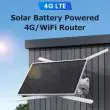
Solar-powered 4G router with 20W dual panels, 20,100mAh battery and IP66 enclosure for outdoor Wi‑Fi coverage.
Seasonal performance: best in spring and summer, when long sunny days can keep it running day and night with light use. In autumn and winter the short days mean it will switch off overnight until the panels recharge it, sooner with cameras connected.
Converts 4G/3G signal into Wi‑Fi network
Supports up to 20 Wi‑Fi devices or cameras
Wi‑Fi coverage approx. 30–50 metres (open area)
2 × Wi‑Fi 5dB high-gain antennas
4 antennas total: 2 × 4G + 2 × Wi‑Fi
Downlink up to 150 Mbps / uplink up to 50 Mbps
2.4 GHz Wi‑Fi (IEEE 802.11b/g/n)
Unlocked standard SIM slot for UK networks
Web gateway access via 192.168.0.1
Smart solar controller over-charge protection
Runs on its battery after dark; how long depends on the day's sun and the devices connected
Set the router up with an unlocked standard SIM, then use the web gateway at 192.168.0.1 to name your Wi‑Fi network and change admin details to match how you want the connection managed on site.
✓ 4G to Wi-Fi Conversion✓ 20,100mAh Battery✓ Dual 10W Solar Panels✓ Quad Antenna 5dB Gain✓ IP66 Weatherproof✓ Free 24 Hour UK Delivery On All Orders
Perfect for farms, construction sites, gardens and other remote spots without wired broadband — powered by sunlight and independent of the mains grid.
4G Network Input, Wireless Wi-Fi Output – Connect phones, cameras and laptops to an off-grid Wi-Fi network.
Smart Connectivity Features
Off-grid internet access powered by solar energy, designed for outdoor and remote sites.
Reliable 4G Input
Unlocked for UK networks (Vodafone, EE, O2, Three)
4G/3G bands supported for wide regional coverage
Stable data conversion at up to 150 Mbps download
Works seamlessly in urban or rural environments
Connect up to 20 devices or cameras simultaneously
Solar Powered Efficiency
Dual 10W high-efficiency monocrystalline panels
Smart solar controller with over-charge protection
Charge directly from sunlight — no mains required
Battery keeps it running after dark; runtime depends on the day's sun
Environmentally friendly renewable power source
Advanced Wi-Fi Output
Strong 2.4 GHz Wi-Fi coverage (30–50 m radius)
Dual 5dB antennas for increased signal stability
Connect phones, laptops, IP cameras easily
Web interface access: 192.168.0.1 (admin/admin)
Customisable Wi-Fi name and password settings
Wi-Fi radiation distance in open areas can reach 30–50 metres – strong signal for multiple devices.
Technical Excellence
Built to withstand demanding outdoor conditions, the router is made for long-term durability.
Power System
20-watt peak solar power (2 × 10W)
High-capacity 20,100mAh rechargeable battery
Efficient charge management circuitry
Can be topped up from a 5V USB supply (first charge and winter top-ups)
Cameras powered from its output ports shorten battery time: power them separately where possible
Build Quality
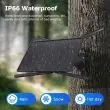
IP66 waterproof and dust-proof housing
UV-resistant, weather-protected components
–15°C to +60°C operating temperature
Durable ABS body with metal bracket mount
Weatherproof for year-round outdoor mounting
Control & Management
Browser gateway access (192.168.0.1)
Default user credentials: admin / admin
Network status and diagnostic monitoring
Customisable SSID and security settings
Indicator LEDs for power, 4G, Wi-Fi strength
Charged by its two 10W panels. Give it a full first charge from a 5V USB supply before fitting.
Installation & Connectivity
Simple setup with flexible mounting and clear configuration ensures fast deployment for all types of properties.
Installation
Mount using included bracket and screw set
Position panel south-facing for best solar output
Connect router unit securely to avoid moisture
Check indicator lights before final fix
Full guide provided with every unit
Signal Optimisation
Keep router clear of large obstructions
Ideal height 2 – 2.5 m for optimal coverage
Adjust antenna angles gradually to refine signal
Test Wi-Fi strength using phone or laptop
Supports up to 20 connected devices
Typical Uses
Remote CCTV connectivity
Farmyard or orchard Wi-Fi access
Industrial site and warehouse coverage
Temporary event or construction networks
Cabins and off-grid homes
Designed for efficiency, durability and simplicity, the PowerBee Solar Router brings a 4G connection wherever conventional broadband isn't available.
Will it run 24/7? On long, sunny late-spring and summer days with light use, it can run day and night. From autumn, and when cameras are powered from it, expect it to switch off overnight until the panels recharge it. Powering cameras separately makes the biggest difference, and a 5V USB supply can top it up when the sun can't.
Product dimensions – shows dual solar panels, Wi-Fi antennas, 4G antennas, and mounting bracket layout.
Your PowerBee Solar Router includes a mounting bracket, screws, and screwdriver.
Use a drill and spanner for secure attachment to walls, fences, or poles.
Ensure all fixings are weather-protected and tightened firmly for outdoor use.
Mounting the Solar Panel & Router
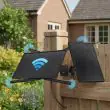
Attach the router unit to the rear of the solar panel using the supplied bracket and screws.
Fit the panel assembly to a solid surface, ideally 2–2.5 metres above ground level.
Angle the panel to face due south whenever possible. In the UK this orientation maximises sunlight capture, especially in winter when the sun is low.
Adjust tilt between 35°–45° for better winter charging. It helps, but it can't make up for short winter days.
Positioning for Optimum Signal
Install in a clear, elevated area with minimal obstacles between the router and your connected devices.
Expected Wi-Fi range: 30–50 metres in open space; reduce obstructions for stronger coverage.
Keep antennas vertical and well-spaced; a slight rotation may improve signal in certain locations.
Test connectivity after mounting by checking your phone or laptop’s Wi-Fi strength.
Important Notes
Avoid shaded or north-facing locations as they reduce charging output—reposition if needed.
Clean the solar panel surface occasionally with a soft cloth to remove dust, frost, or debris.
Ensure good airflow around the router housing for heat dissipation and long-term durability.
Check indicator lights and SIM card connection before finalizing installation.
For consistent power and strong Wi-Fi coverage, mount your PowerBee Solar Router in a sunny, south-facing position. Good orientation gets the most from the winter sun, but expect shorter running in the darker months.
Position the solar panel where it receives direct sunlight for most of the day.
The integrated solar controller charges the internal 20,100mAh battery automatically — no wiring needed.
After a sunny day it keeps running after dark on its battery. In autumn and winter the short days mean it may switch off overnight until the panels recharge it.
2. Insert SIM & Activate
Insert a 4G SIM card from your chosen UK network (Vodafone, EE, O2, or Three) into the router slot.
The router connects to the mobile network and converts the 4G signal into a stable Wi-Fi feed.
No broadband or mains connection is needed—fully off-grid connectivity.
3. Connect Your Devices
Use the router’s secure Wi-Fi network to connect cameras, phones, laptops, or smart sensors.
High-gain 5dB antennas provide stable coverage within a 30–50 metre radius in open areas.
Monitor and configure your network through the router’s web interface (192.168.0.1).
4. Easy Maintenance
Periodically clean the solar panel to maintain efficient charging performance.
Ensure antennas remain tightly secured and the panel is unobstructed by shade.
The durable IP66 casing protects against rain, dust, snow, and UV exposure all year round.
That’s it! PowerBee Solar Routers bring off-grid internet to remote homes, farms and commercial sites — wireless and powered by the sun.