Order by 3:00 PM Monday – Friday to receive your parcel the next day.
Orders placed after 3:00 PM ship the next working day on the same 24‑Hour service and usually arrive the following day.
See Full Delivery Information.
Overview
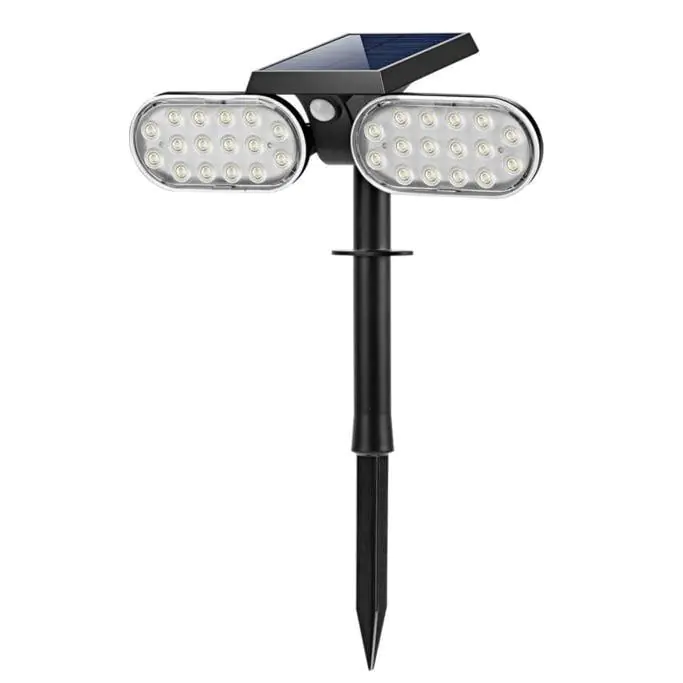
Bring light to garden path edges with two adjustable heads and motion-responsive illumination, in one compact solar unit with no mains wiring or separate panel.
Adjustable twin heads direct light along path edges
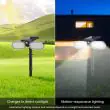
Motion-responsive lighting for passing activity
High and dim levels balance light and battery use
A second setting offers a lower light output
Integrated solar panel keeps installation cable-free
Ground-stake fitting for borders beside a walkway
Cool-white illumination for paths and garden features
Arden brings motion-responsive lighting to the places you walk through after dark. Set it in a sunny border beside a garden path, then angle the two heads towards different sections of the walkway or nearby planting. The panel and battery are built into the same compact unit, so there is no mains wiring or separate panel cable to route.
Useful light when there is movement
The PIR sensor supports a motion-responsive programme with a brighter high level and a dim level. It concentrates the stronger illumination around activity, rather than maintaining the high output throughout the night.
Path lighting with a flexible beam
Two adjustable heads let you aim the light along path edges, towards an entrance to a border or onto a nearby garden feature. It is a directional path light rather than a bollard with an all-round glow, and can also provide accent lighting for planting.
Because the solar panel sits on the light itself, a sunny position matters as much as where the beams point. Keep the panel clear of overhanging plants and check that both the walkway and the open sky remain in reach of your chosen position.
Choose expectations to suit the season
Longer, brighter spring and summer days provide more opportunity to recharge for evening garden lighting. In autumn and winter, motion-responsive use is the more practical focus: brighter light around passing activity, with reduced output between activations, rather than relying on sustained decorative illumination.
Short days, shade, dull weather and frequent activations can still shorten runtime. A motion sensor does not remove those limits, and this is not a promise of all-night winter lighting. The two output settings and conditional runtime figures are explained in the Specifications and How It Works tabs.
A compact fit beside the walkway
The ground-stake design sits in soil beside a path or amongst low planting. Aim the heads towards the area you want to see and away from eye level, keeping the unit clear of the walking surface.
Self-contained outdoor lighting
The black body combines ABS and polycarbonate with an integrated panel and rechargeable battery. It is intended for outdoor garden use; place it in well-drained soil, not somewhere that collects standing water.
Product format
A single twin-head light with an integrated solar panel and a compact ground-stake design.
See It In Action
Take a closer look at Arden’s twin adjustable lamp heads and integrated solar panel in this short product demonstration.
Directional twin-head solar path light with PIR motion sensor
Lamp heads
2 adjustable heads
LED configuration
2 × 16 LEDs, rated 0.2W per LED
Mode 1 output
200 lumens high / 15 lumens dim
Mode 2 output
80 lumens
Light colour
Cool white, 6000–6500K
Solar panel
5V 1.5W polycrystalline
Battery
3.7V 2200mAh
Charging time
Manufacturer rating: approximately 4–5 hours in good sunlight; longer in weak or interrupted sunlight
Rated runtime
Manufacturer ratings from a full charge: Mode 1 up to 12 hours; Mode 2 approximately 6–8 hours. Actual runtime depends on sunlight, season, shading, temperature and motion activations; winter runtime may be shorter.
Choose firm, well-drained soil beside the walkway. The panel needs an open, sunny position, while the lamp heads can be aimed towards the ground you want to illuminate.
Position and fit the light
Check for shade from buildings, fences and planting, including the longer shadows cast by low autumn and winter sun.
Loosen hard soil before inserting the ground stake. Never hammer the light or push down on its panel or lamp heads.
Seat the unit securely beside the path, clear of the walking surface. Keep low plants away from the panel and PIR sensor.
Aim each head towards the path edge or nearby feature. Avoid directing the beams into people's eyes.
Charge and check after dark
Use the product's on/off and mode controls, following the instructions supplied with your light. Allow a full initial solar charge in good sunlight before assessing performance.
Check the light after dark from the approach you normally use. Adjust its position if planting obstructs the sensor or the light misses the intended area.
Seasonal care
Keep the panel clean and recheck for shade as plants grow and the sun becomes lower in the sky. In autumn and winter, prioritise motion-responsive path lighting rather than expecting sustained decorative illumination. Short daylight hours and frequent activations can reduce runtime even with this approach.
Keep the unit upright in well-drained ground and out of standing water.
The integrated solar panel charges the internal battery during daylight. After dark, the selected programme controls how the two LED heads use the stored energy. The adjustable heads direct the light onto separate areas; they do not increase the total rated output.
Mode 1: motion-responsive high and dim light
Mode 1 has a 200-lumen high level and a 15-lumen dim level. The PIR sensor responds to movement so the light can provide stronger illumination around activity, with reduced output between activations. The high figure is not a continuous all-night brightness promise.
Mode 2: a lower output
The second programme is rated at 80 lumens. The manufacturer gives a runtime of approximately 6–8 hours from a full charge under suitable conditions. Follow the instructions supplied with the light when selecting programmes.
Why the season matters
Spring and summer offer longer charging days for evening illumination and garden accents. In autumn and winter, motion-responsive use puts the emphasis on useful light around passing activity rather than sustained decorative lighting. Its dim level still uses energy, and repeated activations use more.
The manufacturer rates Mode 1 for up to 12 hours from a full charge. This is a conditional rating, not a winter guarantee: sunlight, shade, temperature and the number of activations all affect how long the light runs.
Common questions
Is this a path light or a spotlight?
Both uses are possible. Its low ground-stake position and motion-responsive lighting suit path edges; the adjustable heads can also highlight nearby planting. Unlike a traditional bollard, it gives directional light rather than an even ring of illumination.
Will it light all night in winter?
That cannot be guaranteed. Short, dull days may not replace the energy used overnight. Motion-responsive use is the practical focus in the darker months, but runtime still depends on charging conditions and activity.
Can the heads point in different directions?
Yes. Angle them towards different sections of the path or a path edge and nearby garden feature.
Does it need a separate solar panel or mains connection?
No. The panel and rechargeable battery are integrated into the light.