Order by 3:00 PM Monday – Friday to receive your parcel the next day.
Orders placed after 3:00 PM ship the next working day on the same 24‑Hour service and usually arrive the following day.
See Full Delivery Information.
Overview
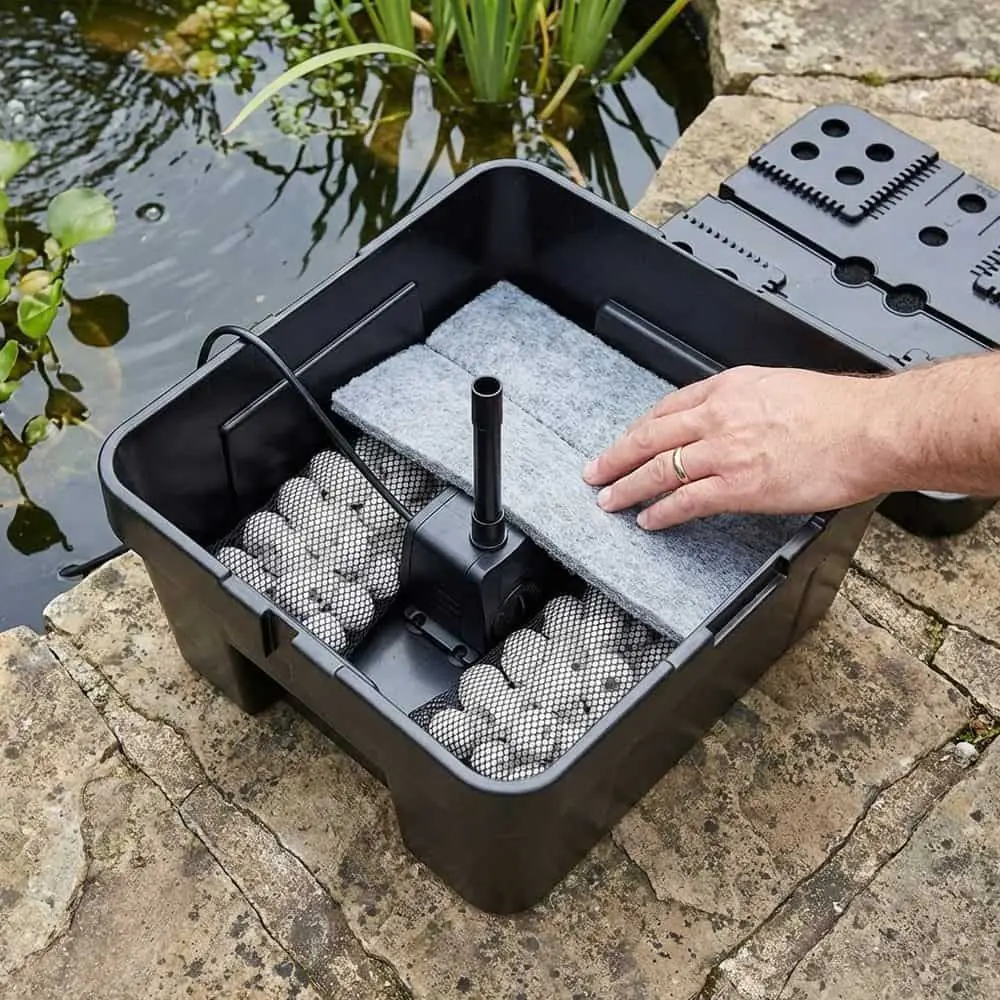
A 20-litre filter box that sits on the bottom of your pond with your fountain pump inside it. The filter pads sit over the pump, so leaves and sludge are kept away from it and your fountain keeps its shape for longer. Pump not included.
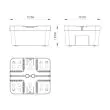
20-litre submersible filter box, 372 × 330 × 185 mm
Your fountain pump sits in the centre, protected from pond waste
2 filter pads included, plus 2 mesh bags to fill with filter media
Two-piece lid: the pump cable and fountain tube come out between the halves
Works with solar or mains fountain pumps. It's the same box used in our solar pond filter kits
Not included: pump and filter media (bio balls, bio rings or small stones)
20 Litre Submersible Pond Filter Box for Fountain Pumps
The PowerBee SPF-20 is a 20-litre filter box that houses your fountain pump. Put the pump in the centre, lay the two filter pads over it, fit the lid and lower the box onto the bottom of your pond. The box shields the pump from leaves, sludge and pond waste. Your pump stays unblocked, your fountain keeps a good shape for longer, and the pond water is filtered as it runs.
Why Put Your Pump in a Filter Box?
Protects the pump: a bare pump on the pond floor sucks in debris and clogs. In the box, water passes the filter pads before it reaches the pump.
A better fountain for longer: a part-blocked pump gives a weak or lopsided spray. Keeping the intake clear keeps the fountain looking right.
Cleaner water: the pads trap floating dirt, and you can add biological media in the two mesh bags for extra filtering.
Out of sight: the box sits under the water, and only the fountain shows.
What's in the Box
Filter box (20 litres, 372 × 330 × 185 mm)
Two-piece lid
2 filter pads
2 mesh bags for filter media
Not included: fountain pump, filter media (bio balls, bio rings or small stones), solar panel and hose. Want everything in one box? See our Solar Pond Filter Kit (700 LPH pump, 12W solar panel and this box) or the 1400 LPH Solar Pond Filter Kit with battery.
Which Pump?
Any submersible fountain pump that fits in the centre of the box, solar or mains. The pumps in our two solar pond filter kits use this box. For a smaller pond, see our Small Eco Filter Box.
Rate this product
0/5
0 Reviews
Please rate this product, describe its advantages and disadvantages, please share your impression about its use
You'll need a submersible fountain pump (not included). Filter media for the mesh bags is optional.
Assembly
Place the fountain pump in the centre of the box.
If you're using filter media, fill the two mesh bags with bio balls, bio rings or small stones and put one each side of the pump.
Lay the two filter pads on top of the pump, with the pump's fountain tube coming up through one of the holes in the pads. Adjust the pump so it lines up.
Fit the two lid halves. The pump cable and fountain tube come out through the gap between them.
Connect the pump to its power supply (solar panel or mains), keeping any connections out of the water.
Lower the box onto the bottom of the pond and switch on.
Cleaning & Maintenance
When the fountain weakens: lift the box, take off the lid and rinse the filter pads. Rinse them in a bucket of pond water rather than tap water if you're using biological media, so you keep the good bacteria.
Filter media: clean or replace it when it's clogged.
Pump: look after it as its own instructions say. A clean pump runs longer.
The box is a protective housing for your fountain pump. Your pump does the work and the box filters the water before the pump can take in any debris.
1. Water Comes In Through the Lid
The pump draws pond water into the box through the holes in the lid.
2. The Filter Pads Catch the Dirt
The two filter pads sit over the pump and trap leaves, sludge and floating debris before they reach the pump intake.
3. Optional Biological Filtering
Fill the two mesh bags with bio balls, bio rings or small stones and good bacteria will grow on them. These bacteria help break down fish waste and keep the water healthier.
4. Clean Water Out Through the Fountain
The pump pushes the filtered water up its fountain tube and out of the top of the box, giving you a fountain and aerating the pond.
What size pond can this four-stage box handle with or without fish?
It is suitable for ponds up to 1,500 litres without fish, or up to 1,000 litres with fish. For a 1,000-litre pond containing fish or carrying a heavy organic load, the specification recommends pairing it with a 700–1,500 LPH pump and adding the optional 5W external UV clarifier. Ponds over 1,500 litres or koi systems should use a larger setup.
Can I use my existing pump, and what flow rate does it need?
Yes. The box accepts a compatible submersible solar or mains pump rated from 300 to 1,500 LPH, with the pump positioned inside chamber 3. The pump is not included, and neither are the solar panel, cable, hosing or filter media. For the stated solar pairing, the installation guidance identifies a separately sold 700 LPH, 12W solar pump.
How do the four chambers clean the water, and what media do I need?
Water passes through coarse mechanical media in chamber 1, fine mechanical media in chamber 2, biological media around the pump in chamber 3, and an optional polishing pad in chamber 4 before returning through a fountain outlet or hose. Recommended media are coarse sponge or pad, fine sponge or filter wool, bio-balls or ceramic noodles, and a polishing pad if required. Media are not supplied.
Сonsultation
If you have questions, please ask, do not hesitate,we are always happy to help you