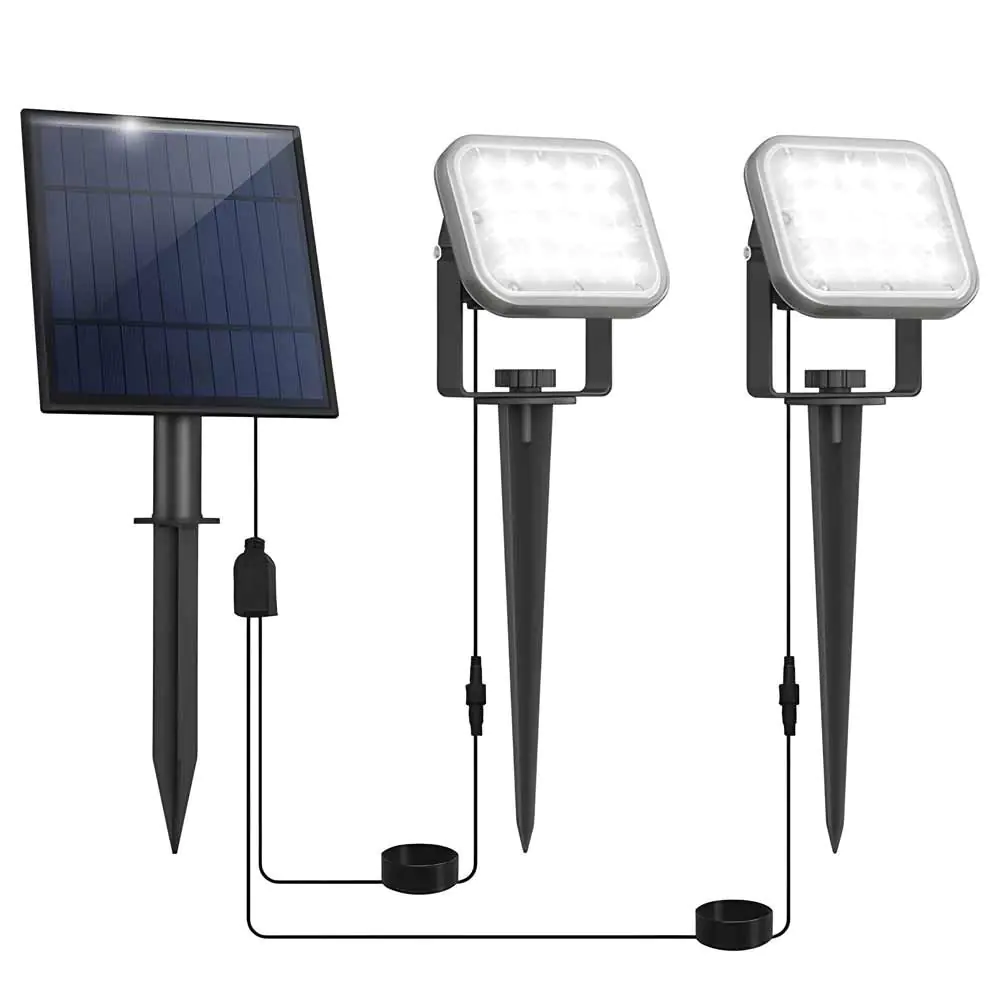
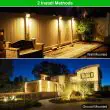
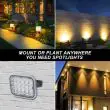
Dual head solar spotlight with 239 lumens total output, a remote 3W solar panel, and IP65 rating for wall-mounted or ground-stake garden lighting.
239 lumens total from dual adjustable heads
20 LEDs per head for even light distribution
Remote 3W polysilicon solar panel
3m cable from panel to each head
High (100%) and Eco (50%) brightness modes
Automatic dusk to dawn operation
IP65 weatherproof rating
Wall mount or ground stake installation
Seasonal performance: Best in spring and summer; limited winter operation depends on strong direct sunshine reaching a well-positioned, unshaded solar panel.
Optima Dual Head Solar Spotlight — Product Overview
Brighten your outdoor space all year round with Powerbee’s Optima Dual Head lighting system. Featuring twin adjustable spotlights and a powerful remote solar panel
✓ Twin adjustable heads, warm or cool white✓ Remote 3W solar panel for fast charging✓ 2000mAh battery, up to 12 hours runtime✓ Wall or ground mount, 270° rotation✓ IP65 weatherproof alloy – built to last✓ Free 24 Hour UK Delivery On All Orders
this professional-grade lighting system delivers up to 239 lumens of focused light with zero running costs—perfect for gardens, paths, entrances, and features.
Engineered for Reliable Performance
Efficient Solar Charging
High-efficiency 3W polysilicon panel ensures quick charging, even in variable light. Remote design allows optimal position away from shade.
Intelligent Battery Management
Built-in 2000mAh lithium-ion battery with two brightness modes supports long, dependable lighting—even through the winter months.
Smart Auto Operation
Advanced dusk-to-dawn sensor turns lights on automatically at night and off at sunrise, so you never have to adjust or remember a switch.
Flexible Installation & Uses
Twin Adjustable Spotlights
Target lighting exactly where you need it with 270° adjustable heads—highlight plants, trees, signs, or doorways from a single solar unit.
Ground or Wall Mount
Versatile mounting for easy fit into lawns, borders, fences, or walls. Weatherproof quick-fit hardware included for both options.
All-Season Lighting
Enjoy up to 12 hours of light in summer and up to 4 hours in winter (on low mode), keeping entrances, paths, and key features illuminated all year.
Professional Performance & Durability
Superior Brightness
Each head outputs up to 120 lumens with 20 superbright LEDs and choice of warm or cool white—making it 50% brighter than standard outdoor lights.
Built to Last
Robust powder-coated die-cast aluminium body withstands year-round weather. IP65 waterproofing for full outdoor protection.
Maintenance-Free Living
No mains wiring, no electricity bills, and a replaceable battery for years of hassle-free lighting. Eco-friendly and sustainable for every home.
Follow these practical steps to ensure optimal performance from your outdoor spot lighting. Proper installation will maximize illumination and ensure reliable operation throughout the year.
1. Choose Your Location
Careful planning ensures the best performance from your lighting system.
Select areas requiring illumination
Ensure unobstructed access to sunlight
Check product specifications for coverage area
Avoid areas with excessive shade or obstacles
2. Solar Panel Positioning
Correct panel placement is crucial for maximum energy collection.
Position panel where it receives direct sunlight
South-facing placement recommended for best results
Avoid shadows from buildings or vegetation
Keep panel clean and free from debris
3. Ground Stake Installation
Proper ground installation ensures stability and longevity.
Soften hard ground with water before insertion
Never force stakes into rocky soil
Ensure stakes are straight and stable
Consider alternative mounting if ground is unsuitable
4. Wall Mounting (Where Applicable)
Follow these steps for secure wall installation.
Use appropriate fixings for your wall type
Ensure mounting surface is strong and stable
Mark drilling points before installation
Check unit is level after mounting
5. Cable Management
For units with separate panels, proper cable management is essential.
Plan cable route carefully
Protect cables from garden tools
Allow sufficient slack for adjustments
Secure cables neatly and safely
6. Final Adjustments
Complete your installation with these important checks.
Adjust light direction for desired coverage
Check all mountings are secure
Remove protective films if present
Wait for dusk to verify operation
Important Notes
Always refer to your product's specification sheet for exact coverage areas and cable lengths
Allow 24–48 hours for initial charging
Consider seasonal sunlight variations when planning installation
Regular cleaning of solar panels will ensure optimal performance
Solar landscape lights harness the power of the sun to provide eco-friendly, cost-effective illumination for your outdoor spaces. By understanding their operation and placement needs, you can achieve the best performance throughout the year — though winter output is naturally limited in the UK.
Solar Energy Collection
Each light includes a photovoltaic solar panel that captures sunlight during the day and converts it into usable electricity.
Position the panel in direct sunlight for maximum energy collection
Keep the surface clean and free of dust, leaves, or debris
In winter, aim the panel south toward the midday sun for best results
Longer sunny days produce longer nighttime runtime
Energy Storage
The electricity generated during daylight is stored in an internal rechargeable battery, ready to power the light after dark.
Batteries are designed for daily charging and discharging cycles
Some models include replaceable batteries for extended lifespan
Correct panel placement helps achieve a full daily charge
Reduced winter sunlight can significantly limit stored energy
Automatic Activation
Built-in dusk sensors detect low light levels and automatically switch the lights on each evening.
No manual switching is required for dusk-to-dawn operation
Lights automatically turn off again at sunrise
Some models allow manual override or on/off control
Important: In winter, runtimes are much shorter and some solar spotlights may not operate reliably during prolonged cloud or rain.
Lighting Modes & Optimization
Many models include brightness settings or modes to help extend runtime, especially in lower-light months.
Use lower brightness modes in winter to increase runtime
If available, set timers or reduced-hour operation
Dimming features help conserve stored battery power
For best winter performance, keep panels angled south and fully clean
Solar landscape lights provide an easy and sustainable way to illuminate gardens, pathways, and outdoor features using free solar energy. However, in the UK and similar climates, winter performance is naturally limited due to shorter daylight hours and frequent cloud cover. For best results, position panels in full sun, face them south at a steeper winter angle, and use dimming or timer functions where available. Even with perfect setup, expect shorter runtimes during darker months.